

Gear Guides: Binoculars, Scopes, and Cameras
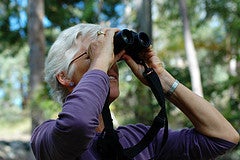 Photo: Cee Rose, Flickr Creative Commons |
Migration’s in full swing, and with the weather warming up, now’s a great time to get outside and seek out some birds! In need of the right gear? Ä¢¹½Av magazine has you covered, with advice about binoculars, spotting scopes, tripods, and cameras.
“The Ä¢¹½Av Guide to Binoculars,â€� from the
Tips from Wayne Mones:
- A wide field of view makes it easier to find birds and to follow them when they fly.
- If you pay more than $200 for binoculars, make sure they’re waterproof and nitrogen purged, so they don’t get fogged up in humid conditions.
- Don’t clean your binocular lens with tissue, toilet paper, paper napkins, paper towels or newspaper—they will all scratch and eventually destroy the lens coating crucial to your binoculars’ optical performance.
“The Ä¢¹½Av Guide to Spotting Scopes,â€� from the
Some questions to ask before purchasing one:
- Will you purchase a scope with a straight or angled body? (Mones strongly recommends the latter, for its ease-of-use and convenience when sharing with others.)
- What size scope will you choose?
- Will you buy a zoom or fixed-power wide-angle model?
Before you make a final decision, attend field trips and birding festivals, and ask a lot of questions. “Since a spotting scope is a major investment, and since you will probably buy only one (okay, maybe two—three at the outside) in your lifetime,� reads the pullout intro, “you will really want to get it right.�
“The Ä¢¹½Av Guide to Cameras,â€� from the
Some key pointers from writer David Schloss for picking out camera equipment:
- Decide between an SLR, a compact, or a hybrid
- Choose a camera with enough resolution to capture the level of detail you desire, whether that’s a hummingbird’s wings or an elephant’s wrinkles
- Pick a lens that’s appropriate for the type of shooting you plan to do (e.g., landscape shots fare much better through wide lenses)
Tripods
“Legs to Stand On,� web exclusive, accompanying
Check this out for Schloss’ picks for tripods, tripod heads—the mechanism that connects the camera and the stand—and other must-have gear for taking beautiful wildlife pictures.
